Market & Regulation
GitHub deprecates SHA-1 SSH keys, adds post-quantum crypto
GitHub Changeloghigh confidence
Why it matters
- →Developers using older Git clients or SSH libraries may face connection failures after 2026.
- →GitHub is pioneering post-quantum cryptography adoption in mainstream developer tools.
- →The deprecation of SHA-1 signatures forces a security upgrade for legacy RSA key usage.

GitHub announced significant changes to its SSH security protocols, effective in 2026. The platform will remove support for the ssh-rsa signature type (SHA-1) and the diffie-hellman-group-exchange-sha256 key exchange mechanism. New RSA keys must be at least 3072 bits. Additionally, GitHub is adding support for the post-quantum key exchange method mlkem768x25519-sha256 on github.com and GitHub Enterprise Cloud (excluding US regions). These changes apply to SSH connections; HTTPS users are unaffected. Users must ensure their Git clients support rsa-sha2 signatures or switch to Ed25519 keys.
Read originalMore from GitHub Changelog
 © GitHub Changelog
Models & Labscoding
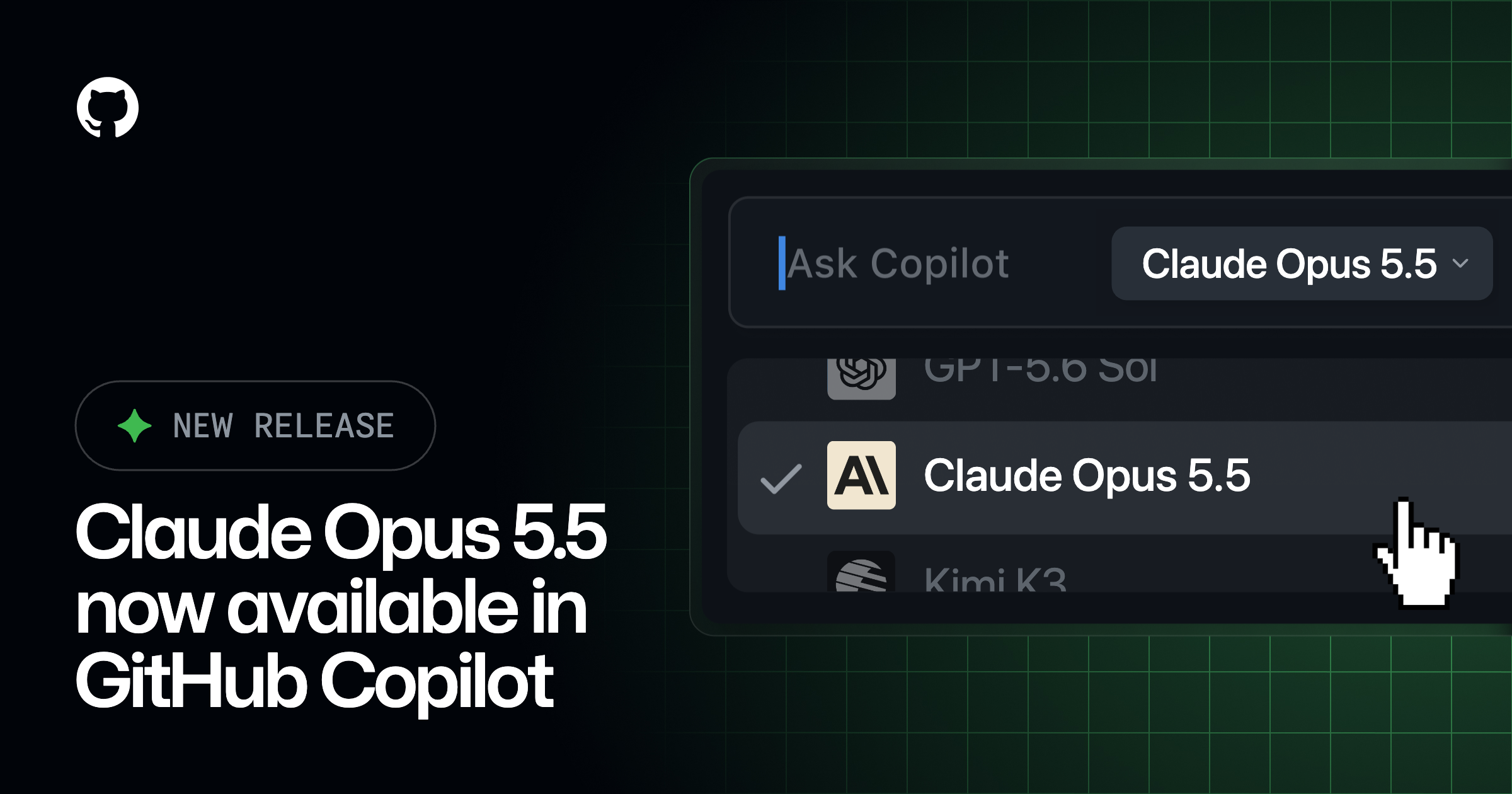
Claude Opus 5.5 arrives in GitHub Copilot
Anthropic’s latest flagship model is finally inside the IDE, marking a significant shift for enterprise developers who rely on GitHub Copilot. Early benchmarks suggest Opus 5.5 matches its predecessor’s accuracy while consuming fewer tokens and recovering faster from errors in complex agentic workflows. This efficiency gain matters because long-running coding tasks often hit context limits or incur high costs; reducing step count directly lowers friction for multi-file refactoring. The gradual rollout across major IDEs means builders can soon test whether this model handles their most stubborn debugging sessions better than the previous standard.
GitHub Changelog
 © GitHub Changelog
Coding Toolscoding
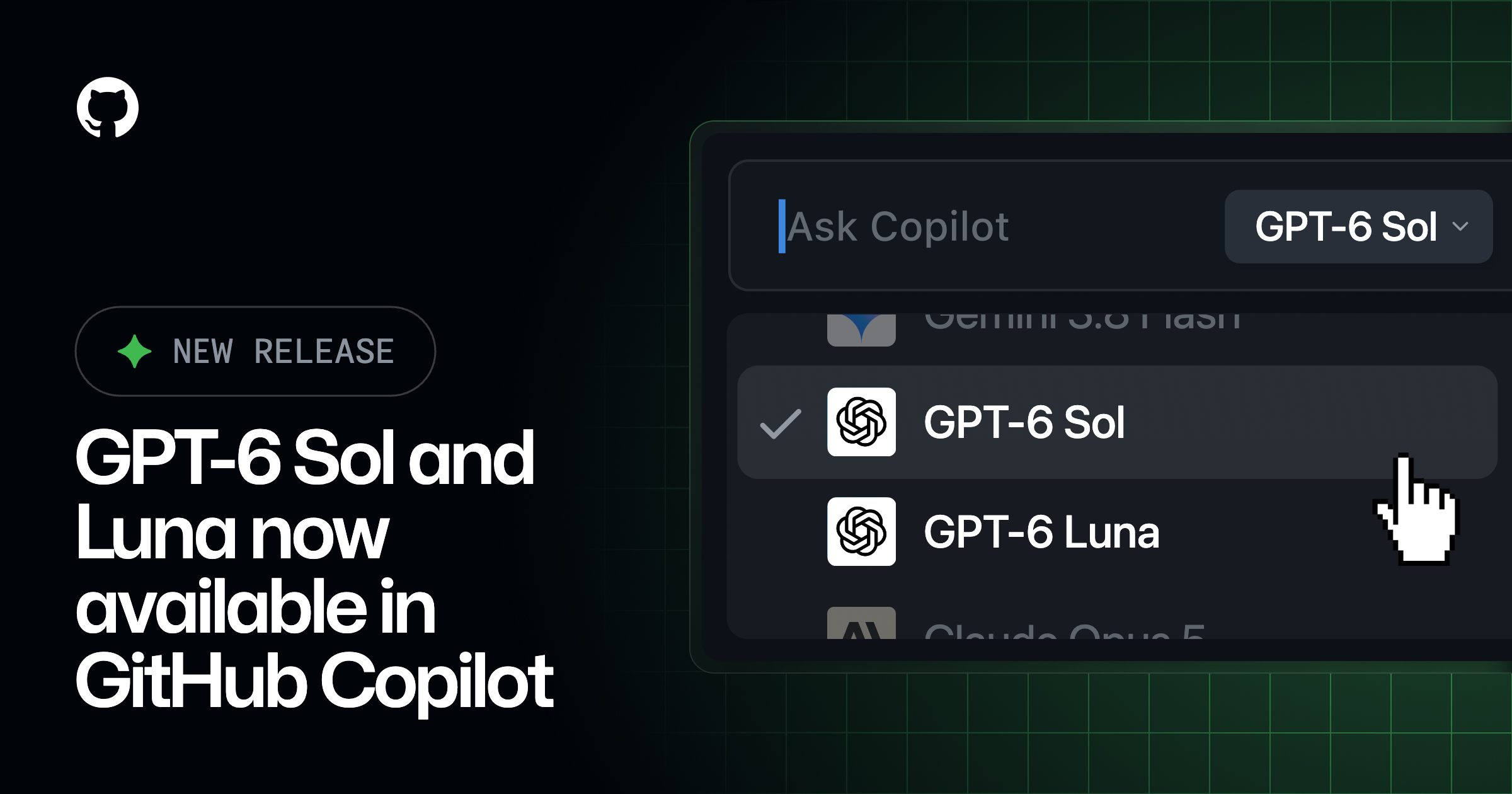
OpenAI expands GPT-6 family with Sol and Luna for Copilot
OpenAI is widening the GPT-6 lineup inside GitHub Copilot by adding two distinct models: Sol for complex agentic coding and Luna for fast, cheap tasks. This moves Copilot away from a single default toward a tiered strategy where developers can explicitly choose between heavy reasoning and lightweight efficiency. Sol targets multistep validation in Pro+ and Enterprise tiers, while Luna opens up to the broader Pro user base as the lowest-cost option. The gradual rollout across IDEs like VS Code and JetBrains means teams can now tune their coding assistants for specific workload profiles rather than accepting a one-size-fits-all approach.
GitHub Changelog
 © GitHub Changelog
Coding Toolscoding
GitHub Deprecates All-Platform CodeQL Bundle
GitHub is killing the convenience of a single download for CodeQL CLI. Starting with version 2.27.0, the monolithic all-platform bundle is deprecated and will vanish by March 2027. Users must now switch to platform-specific archives, a move that forces CI/CD pipelines to manage separate artifacts for Linux ARM64, x86_64, and macOS. This ends the era of 'one size fits all' distribution for static analysis tooling on GitHub, requiring developers to explicitly target their build environment's architecture.
GitHub Changelog
More in Market & Regulation
 © The AI Daily Brief
Market & Regulationbusiness
Scott Bessent Rejects Liability Shields for AI Labs
US Treasury Secretary Scott Bessent has publicly rejected the idea of providing liability shields to artificial intelligence laboratories.
The AI Daily Brief
Investment · $189M
Market & Regulationbusiness
Verda raises $189m for cloud infrastructure
Verda has secured $189 million in a funding round led by Emergence Capital, signaling strong investor appetite for next-generation cloud infrastructure. While the specific technical architecture of Verda's platform remains under wraps in this brief, the size of the raise suggests a significant bet on optimizing cloud operations or reducing costs. This capital injection positions the early-stage startup to scale rapidly against established incumbents in the crowded cloud management space. The deal underscores continued venture confidence in foundational infrastructure plays despite broader market cooling. Investors are betting big that Verda can solve the fragmentation problem in modern cloud stacks. With this war chest, they can finally compete with legacy providers on price and performance. The real test will be whether their tech actually delivers on those promises.
Sifted
Investment · €11m
Market & Regulationbusiness
NIF backs defence AI startup Terasi in €11m raise
The Nordic Innovation Fund is backing Terasi, a defence-focused AI startup, in an €11 million funding round. This signals growing institutional confidence in specialized AI applications within the security sector, particularly as geopolitical tensions drive demand for autonomous systems and intelligence analysis tools. The investment marks a shift towards deeper integration of AI in national defence strategies across Europe. For builders in the defence-tech space, this validates the commercial viability of niche, high-stakes AI solutions. Terasi’s focus on defence-specific challenges sets it apart from general-purpose AI ventures. The capital injection allows for rapid scaling of proprietary models tailored to security operations. This move by NIF suggests a broader trend of public funds supporting strategic tech sovereignty.
Sifted