Coding Tools
GitHub Copilot Code Review Levels Now Available
GitHub Changeloghigh confidence
Why it matters
- →Allows developers to customize code review depth based on pull request complexity.
- →Enhances efficiency by providing appropriate scrutiny levels for different types of code changes.
- →Supports organizational control over code review processes with default settings.
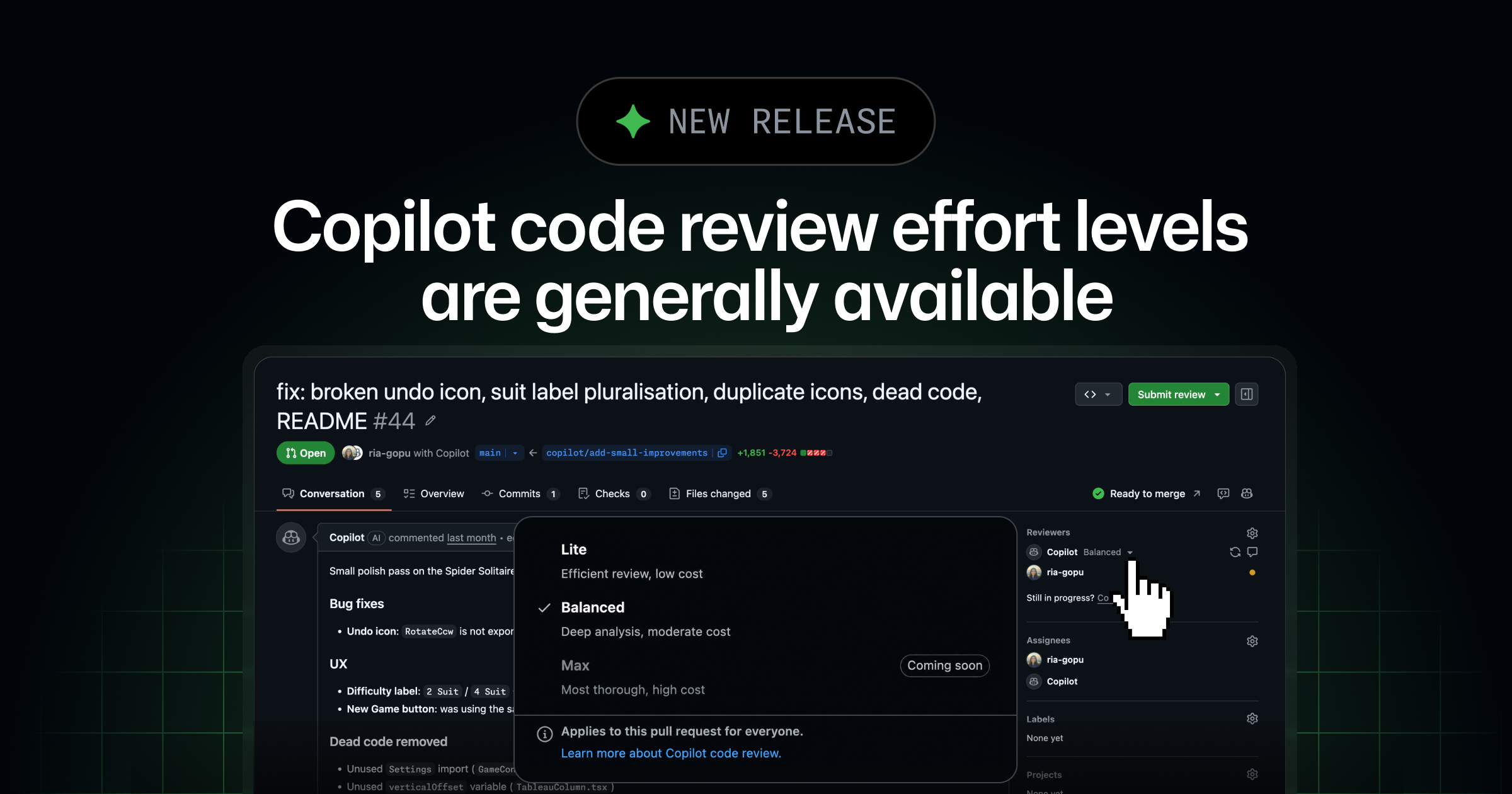
GitHub has announced the general availability of its Copilot code review effort levels, Lite and Balanced. These options allow developers to adjust the depth of code reviews based on the complexity and risk associated with pull requests. Lite is intended for simple changes, whereas Balanced is for more complex or security-sensitive code. Available with Copilot Pro and higher plans, organizations can set default review levels that repositories can inherit. This update aims to streamline the code review process by providing tailored feedback according to the needs of each pull request.
Read originalMore from GitHub Changelog
 © GitHub Changelog
Coding Toolscoding
GitHub Copilot Enhances Workflow with New Features
GitHub Copilot's latest updates bring a suite of enhancements aimed at improving workflow efficiency and user interaction. The updates include the ability to see which AI model handled requests, manage multiple sessions with ease, and explore changes without disrupting ongoing work through the new /worktree command. The integrated browser now allows for element-level feedback, and dictation supports multiple languages on-device. These features collectively enhance the user experience by providing more control and flexibility in managing tasks and reviewing changes.
GitHub Changelog
 © GitHub Changelog
More in Coding Tools
Coding Toolscoding
Claude Code v2.1.224 Update Released
Claude Code's latest update, v2.1.224, introduces significant enhancements for developers using self-hosted environments. Users can now run Claude Code sessions on their own machines, expanding flexibility for Team and Enterprise plans. The update also simplifies plugin installation with a new archive plugin source, allowing installations from a zip over HTTPS. Additionally, cross-session messaging capabilities have been improved, enabling seamless communication between sessions on different machines. These changes enhance the usability and integration of Claude Code, making it a more robust tool for developers.
Claude Code Releases
 © Matt Wolfe
Coding Toolscoding
Meta Muse Code Beta Released
Meta releases the beta version of its Muse Code tool.