Agents
Exploring Human-Agent Collaboration in Automation
The AI Daily Briefhigh confidence
Why it matters
- →Highlights the evolving role of humans in automated workflows
- →Suggests a shift towards more expert-driven human tasks
- →Explores the potential and limitations of current agent technologies
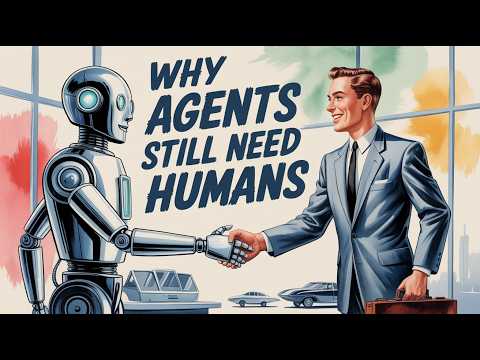
NLW delves into the future of human-agent collaboration, drawing insights from Dan Shipper's essay 'After Automation' and experiments by Every. The discussion emphasizes that automation is not reducing human work but transforming it into more expert-driven tasks. The episode examines concepts like shared team agents, the 'human sandwich' model, and the limitations of fully autonomous agents like OpenClaw. It also highlights how tools like Codex and Claude Code suggest a semi-synchronous approach to managing agent work across devices.
Read originalThe story around this
Earlier coverage that leads up to this article, and what followed. Lines connect each piece to the closest one after it, converging here.


