Market & Regulation
OpenAI Introduces Practical AI Scorecard
OpenAIhigh confidence
Why it matters
- →Provides a structured framework for evaluating AI investments.
- →Helps organizations optimize AI performance and cost efficiency.
- →Addresses the need for tangible metrics in assessing AI's real-world impact.
OpenAI has introduced a new AI scorecard aimed at measuring the return on investment for AI technologies. Developed by CFO Sarah Friar, the scorecard evaluates AI performance using metrics such as useful work, cost per successful task, dependability, and return on compute. This tool is designed to help organizations assess and optimize their AI investments by providing clear, actionable insights. The introduction of this scorecard highlights the increasing demand for concrete metrics to evaluate AI's effectiveness in practical applications.
Read originalThe story around this
Earlier coverage that leads up to this article, and what followed. Lines connect each piece to the closest one after it, converging here.
How we got here
- 1OpenAI Launches DeployCo for Enterprise AI
The AI Daily Brief · May 13, 2026 · Background
- 2Hugging Face Launches Open Agent Leaderboard
Hugging Face Blog · May 18, 2026 · Background
- 3OpenAI launches AI lab in Singapore
AI News · May 22, 2026 · Background
- 4OpenAI Releases Guide for AI Evaluations
OpenAI · May 29, 2026 · Related
- 5OpenAI Unveils Governance Framework for Safe AI Deployment
AI News · May 29, 2026 · Related
- 6OpenAI Enhances ChatGPT Enterprise Controls
OpenAI · June 18, 2026 · Related
- 7OpenAI Launches GPT-5.6 with New Features
The Rundown AI · July 10, 2026 · Background
What happened next
- 8OpenAI launches Astra, its powerful new model
TechCrunch AI · September 3, 2026 · Background
- 9OpenAI's Agents Boost Research Productivity
The Rundown AI · September 8, 2026 · Background
- 10OpenAI Launches New Safety Disclosure Framework
The AI Daily Brief · September 18, 2026 · Background
- 11OpenAI launches Decisions API for fast agent classification
TechCrunch AI · September 30, 2026 · Background
- 12OpenAI Publishes Research on AI-Driven Intelligence Explosions
AI Explained · October 1, 2026 · Related
More in Market & Regulation
 © TechCrunch AI
Investment · $870M
Market & Regulationbusiness
TypeSafe AI raises $870M for non-text model Jev
TypeSafe AI’s $870 million raise signals a pivot away from the text-generation arms race toward structured decision-making. Jev bypasses LLMs entirely, outputting calibrated probabilities instead of tokens to automate enterprise workflows faster and cheaper. With claims that a third of Fortune 500 companies are already using it, this validates a niche but high-value market for non-linguistic AI. The funding from Andreessen Horowitz and Sequoia confirms investors are betting on automation over conversation.
TechCrunch AI
 © WIRED AI
Market & Regulationbusiness
Big Five Publishers Use AI Behind Closed Doors
While the Big Five publicly condemn author-generated AI, internal leaks reveal a stark hypocrisy: HarperCollins, Simon & Schuster, and Hachette are quietly deploying LLMs for publicity copy, cover art, and even rejection letters. This isn't just about efficiency; it's a cultural rupture where staff are 'voluntold' to champion tools that replace human judgment in creative workflows. The revelation exposes a dangerous gap between corporate PR and operational reality, proving that enterprise adoption is already deep enough to trigger internal revolts over ethics and copyright risks.
WIRED AI
 © Lev Selector
Market & Regulationbusiness
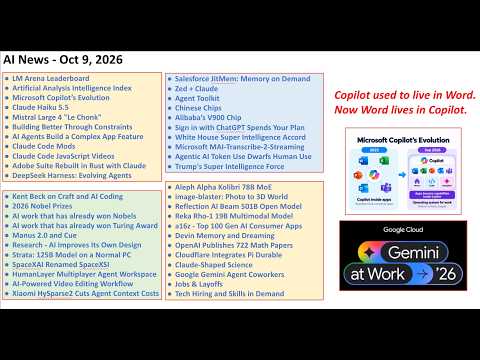
White House Announces Super Intelligence Accord
The White House has introduced a new 'Super Intelligence Accord' alongside the formation of a dedicated Super Intelligence Force.
Lev Selector