Market & Regulation
Midjourney's Bold Pivot to Medical Imaging
The Verge AIhigh confidence
Why it matters
- →Midjourney's pivot could disrupt the medical imaging industry if successful.
- →The use of AI in processing large data sets for imaging is a novel application.
- →The concept challenges traditional imaging methods, potentially offering a faster, cheaper alternative.

Midjourney, an AI startup famous for its image generation technology, is making a surprising move into the medical imaging field. The company has announced a futuristic ultrasound scanner that aims to provide MRI-quality images in a spa-like environment. However, experts are skeptical about the company's claims, citing a lack of evidence and the challenges of achieving such high-resolution imaging with ultrasound technology. This pivot marks a significant departure from Midjourney's existing business model, with AI playing a crucial role in processing the large amounts of data required for the scans.
Read originalMore from The Verge AI
 © The Verge AI
General AIwriting
Fitbit Air: A Smarter AI Health Approach
The Fitbit Air is making waves with its AI-driven health coaching, offering a more personalized approach to fitness tracking. While the hardware remains lightweight and efficient, the real story is the software, particularly the Google Health Coach. This AI coach provides tailored health insights and advice, though it requires significant user input to function optimally. Despite some kinks in the Google Health app, the Fitbit Air represents a step forward in integrating AI into consumer health, offering more than just basic metrics. It's a promising development for those seeking deeper health insights without the usual paywalls.
The Verge AI
 © The Verge AI
Video & Creative AIimage
Sony's AI Camera Assistant Disappoints on Xperia 1 VIII
Sony's AI Camera Assistant on the Xperia 1 VIII has been met with criticism for its underwhelming performance. Unlike Google's Camera Coach, which offers guidance on framing and focus, Sony's assistant merely suggests aggressive adjustments to basic image settings like exposure and white balance. The AI's inconsistent suggestions and lack of transparency about the changes it makes leave users without a clear understanding of how to improve their photography skills. Despite the Xperia 1 VIII's strong camera hardware, the AI assistant's performance issues and tendency to overheat the device detract from the overall experience.
The Verge AI
 © The Verge AI
Market & Regulationbusiness
Nvidia's AI Data Centers Cut Water Use to Near Zero
Nvidia's new AI data center design, Rubin, promises to drastically reduce water usage by employing 100% liquid cooling and operating servers at higher temperatures. This approach captures heat directly at the chip level and uses liquid loops to efficiently dissipate it, potentially reducing water consumption from millions of gallons to nearly zero. While this innovation addresses significant environmental concerns, it leaves questions about construction costs and energy requirements unanswered. The shift represents a notable move towards more sustainable data center operations, though the full impact on the industry remains to be seen.
The Verge AI
More in Market & Regulation
 © Sifted
Investment · $11.7M
Market & Regulationbusiness
Acumino raises $11.7M seed round
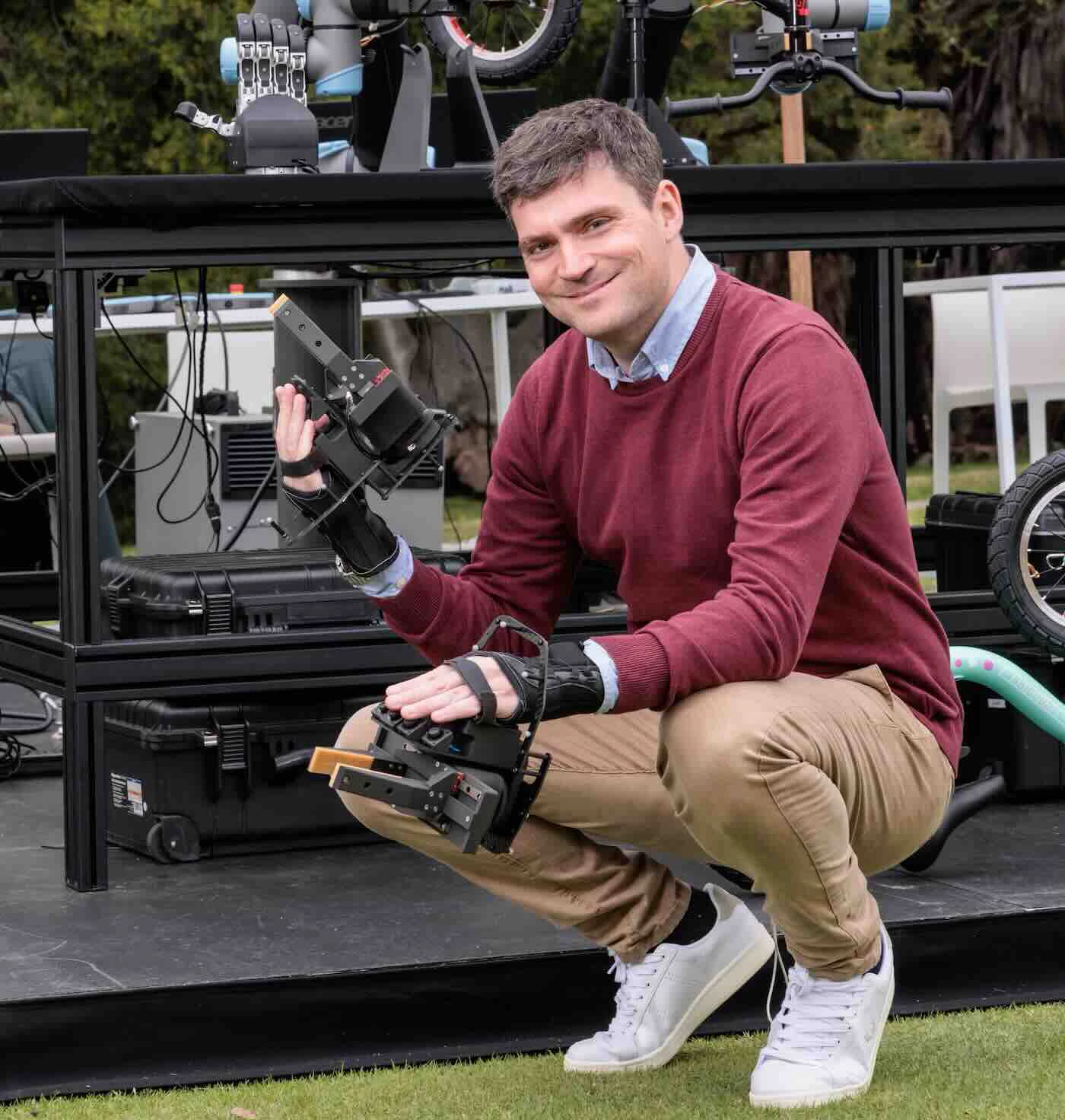
Greek robotics startup Acumino has successfully raised $11.7 million in seed funding, a pivotal move to expand its industrial deployments. Having been selected by DeepMind for its robotics accelerator, Acumino is well-positioned to utilize this investment to enhance its technological capabilities and broaden its market presence. This funding round reflects the increasing demand for innovative robotics solutions in industrial settings, showcasing Acumino's potential to lead in this sector. With the new capital, the company aims to scale its operations and strengthen its foothold in the robotics industry.
Sifted
 © NVIDIA Blog
Market & Regulationbusiness
NVIDIA and AWS Enhance AI Production Capabilities
NVIDIA and AWS are collaborating to streamline AI deployment at scale, addressing key challenges like low-latency inference and GPU price-performance. The introduction of EC2 G7 instances, powered by NVIDIA RTX PRO 4500 Blackwell GPUs, offers significant performance improvements over previous generations, making them ideal for AI, graphics, and data analytics workloads. Additionally, NVIDIA's cuVS library now powers GPU-accelerated vector indexing in Amazon OpenSearch, drastically reducing costs and time for building large-scale vector databases. This partnership ensures that enterprises can leverage high-performance AI infrastructure without the complexity of managing it themselves.
NVIDIA Blog
 © TechCrunch AI
Market & Regulationbusiness
MoEngage Acquires Aampe to Enhance AI Marketing
MoEngage's acquisition of Aampe represents a significant step towards the future of AI-driven personalized marketing. By incorporating Aampe's technology, which deploys AI agents for individual customer engagement, MoEngage aims to offer more precise and tailored messaging solutions. This strategic move positions MoEngage to better compete with industry leaders like Salesforce and Adobe, as it seeks to attract enterprise clients looking for cutting-edge AI marketing capabilities. The deal reflects the increasing trend of integrating AI into enterprise applications to enable autonomous decision-making in marketing strategies, moving beyond traditional segmentation methods.
TechCrunch AI