Market & RegulationInvestment · €32M
Comand AI raises €32M for battlefield software
Siftedhigh confidence
Why it matters
- →Comand AI's platform aims to revolutionize military operations with AI-driven planning and analysis.
- →The funding supports expansion into NATO markets, indicating strategic growth in defense AI applications.
- →The investment highlights the increasing role of AI in transforming traditional military strategies.
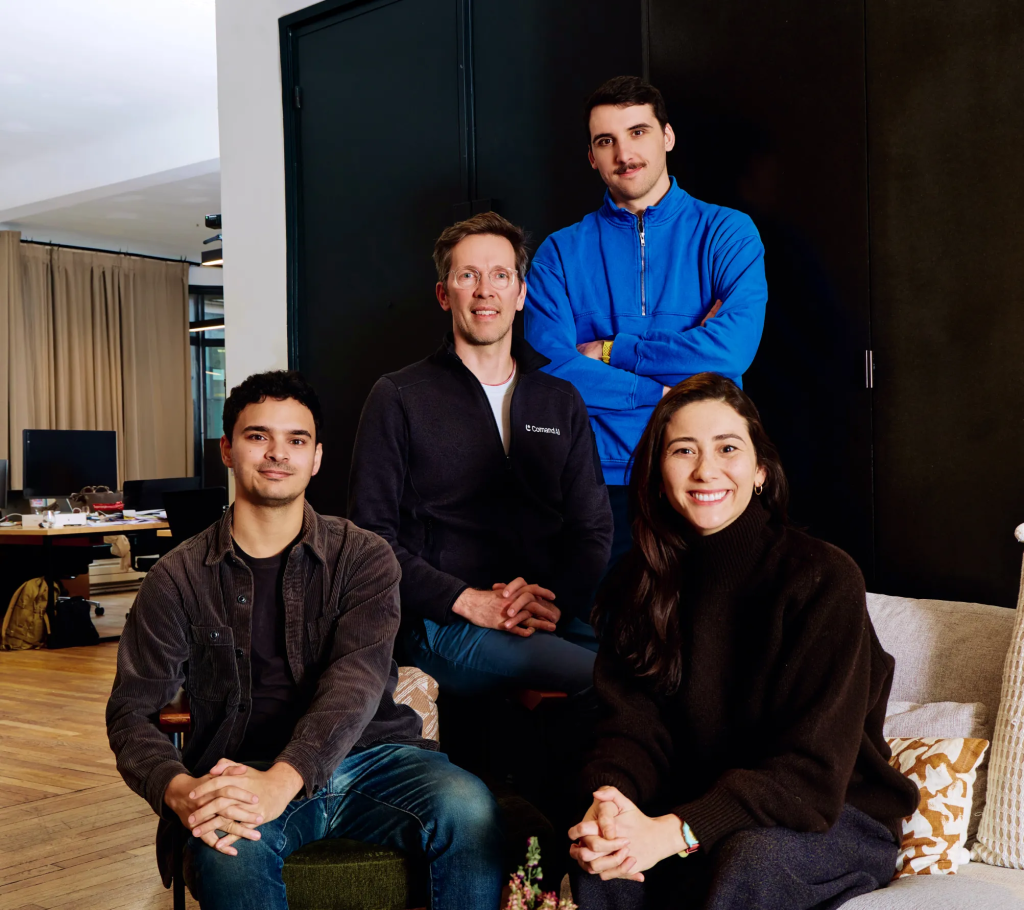
Paris-based Comand AI has raised €32 million in Series A funding to advance its AI software platform for military operations. The round was led by Blossom Capital, with contributions from Saab and Expeditions. The platform is designed to enhance operational planning and analysis, promising to make military operations faster and more efficient. With deployments in France, Germany, and Ukraine, the company plans to expand into NATO markets and new operational domains. This funding reflects a broader trend of integrating AI into defense strategies.
Read originalMore from Sifted
 © Sifted
Market & Regulationbusiness
Anthropic's US Model Ban: Opportunity for Europe?
The US government's decision to restrict access to Anthropic's AI models for non-US nationals has stirred concern in Europe but is seen as an opportunity by some. Uljan Sharka, CEO of Italian AI company Domyn, views this as a chance for European AI firms to step up and fill the gap left by Anthropic's absence. This move could catalyze innovation and competition within the European AI landscape, potentially leading to the development of homegrown alternatives. While the ban poses challenges, it also opens doors for European companies to assert themselves in the AI field, fostering a more diverse and competitive market.
Sifted
 © Sifted
Investment · $60M
Market & Regulationbusiness
Conduct raises $60M for AI operating system
Conduct, a London-based startup founded by former Palantir engineers, has secured $60 million in Series A funding to develop its agentic AI operating system for large enterprises. This funding round, led by Index Ventures and Iconiq, comes less than nine months after their initial $11 million seed round. Conduct's platform aims to streamline the management of complex, customized enterprise software systems by using AI agents to synthesize and implement business logic changes rapidly. With strategic investment from SAP, Conduct is poised to expand its team and enhance its product offerings, targeting the Global 200 enterprises.
Sifted
 © Sifted
Market & Regulationbusiness
Mistral CEO Advocates Open Source AI Amid Anthropic Ban
Mistral is carving out a niche in the European AI sector by promoting open-source models as a response to centralized control by states or corporations. This strategic move follows Anthropic's recent suspension of model access due to US government directives, which has stirred concerns in Europe. Arthur Mensch, Mistral's CEO, highlights the need for sovereignty over AI systems, offering more flexibility and customization than closed-source models. As Mistral expands its infrastructure across Europe, it aims to provide a dependable and independent alternative to US-based giants like Anthropic and OpenAI. The company's approach could redefine how AI technology is accessed and controlled, particularly in a landscape increasingly influenced by geopolitical factors.
Sifted
More in Market & Regulation
 © NVIDIA Blog
Market & Regulationbusiness
France Boosts AI Infrastructure with NVIDIA Technologies
France is making significant strides in AI infrastructure, leveraging NVIDIA technologies to enhance its capabilities. With the construction of a new 44-megawatt data center by Mistral and the deployment of NVIDIA Blackwell instances by Scaleway, France is positioning itself as a key player in Europe's AI landscape. The collaboration with NVIDIA and other partners is fostering the development of open models tailored to local languages and cultural contexts, ensuring compliance with European regulations. This initiative marks a shift from pilot projects to full-scale AI production, promising to accelerate AI adoption across various industries in France.
NVIDIA Blog
 © The Verge AI
Market & Regulationbusiness
Midjourney unveils full-body ultrasound scanner
Midjourney, known for its AI image generation, is venturing into medical technology with the introduction of The Midjourney Scanner, a full-body ultrasound device. This innovative scanner, developed in collaboration with Butterfly Network, uses a ring of sensors to create detailed 3D images of the body's internal composition. The scanner aims to offer image quality comparable to MRI without the associated drawbacks, such as radiation. While the project is still in its early stages, with plans to open a spa in San Francisco by 2027, it represents a significant shift from Midjourney's traditional focus on AI-generated images.
The Verge AI
 © WIRED AI
Market & Regulationbusiness
US Blocks Anthropic's AI Access Over SK Telecom Ties
The Trump administration has restricted Anthropic's Claude Mythos AI model due to concerns over SK Telecom's alleged connections to China. This decision was prompted by Amazon's discovery of vulnerabilities in Fable 5, a version of Mythos, which raised security concerns. In response, Anthropic has chosen to revoke access to its models for all foreign nationals, including those within the US, rather than implementing nationality-based restrictions. This situation illustrates the geopolitical complexities affecting AI technology and the difficulties in balancing security with international cooperation.
WIRED AI