16 × AIAI signal, amplified
AI newsTopicsAboutSources
TelegramFollow on Telegram
AI newsTopicsAboutSources
16 × AIAI signal, amplified

An AI news engine that ingests trusted sources, scores with Claude, and posts only what clears the bar.

Follow on Telegram →

Subscribe

  • Telegram
  • RSS
  • All channels

Newsletter

Used only to send this newsletter. Privacy

Legal

  • Privacy
  • Imprint
© 2026 16 × AI. All rights reserved.A new issue every two days.
Home/Market & Regulation
Market & RegulationInvestment

Oura delays IPO; Anthropic reveals massive AI infrastructure costs

Crunchbase News·September 29, 2026·high confidence

Why it matters

  • →Anthropic's $518B infrastructure obligation proves that frontier AI requires capital commitments previously reserved for national economies.
  • →The $8B operating loss clarifies the true cost of training and serving large language models at scale.
  • →Oura's delay signals broader investor caution in non-AI tech sectors despite strong individual demand.
Oura delays IPO; Anthropic reveals massive AI infrastructure costs
©Crunchbase News

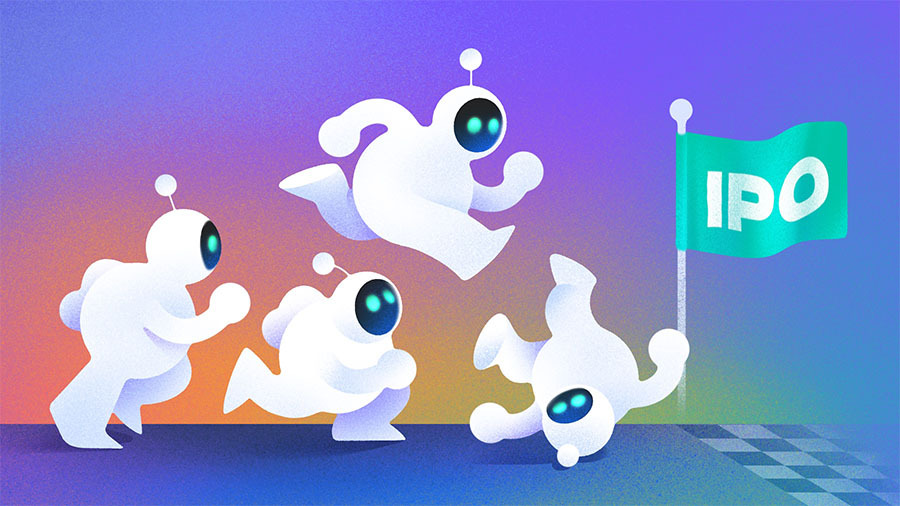
Anthropic has revealed its financials ahead of a planned IPO, reporting $4.6 billion in revenue for 2025 alongside an $8.06 billion operating loss and a net loss of nearly $42 billion. The company faces $518 billion in future cloud and infrastructure obligations, underscoring the immense capital required to compete with OpenAI. While Anthropic aims to list before November, Oura has postponed its own IPO due to market uncertainty, citing strong demand but unfavorable timing. These developments highlight a bifurcated market where AI giants burn cash at scale while consumer hardware firms face headwinds.

Read original

More from Crunchbase News

Tiny Health Raises $33M for Gut Microbiome AI© Crunchbase News
Investment · $33M
Market & Regulationother

Tiny Health Raises $33M for Gut Microbiome AI

Tiny Health secured $33 million to scale its gut microbiome testing and build TinyAI, an internal tool designed to turn raw microbial data into predictive health insights. The company leverages nearly 200,000 samples and shotgun metagenomic sequencing to move beyond simple wellness reports toward early disease risk identification. This funding accelerates their push into enterprise partnerships with major clinics like Mayo Clinic while expanding their proprietary dataset. It marks a significant bet on using AI to decode the gut microbiome for preventive care rather than just diagnostic snapshots.

Crunchbase News

More in Market & Regulation

Investment
Market & Regulationother

Zenithon raises backing from Backed and SOSV

The race to build foundational world models is heating up with Zenithon securing support from Backed and SOSV. This funding validates the thesis that autonomous agents require robust physical simulations to operate reliably in the real world. While specific deal terms remain undisclosed, the backing from established accelerator SOSV signals institutional confidence in this nascent category. It marks a significant step for early-stage labs attempting to bridge the gap between digital intelligence and physical interaction.

Sifted·Sep 30, 2026
Altman delays OpenAI IPO until safety claims are confident
·
Sep 29, 2026
© The Verge AI
Market & Regulationbusiness

Altman delays OpenAI IPO until safety claims are confident

OpenAI is putting its public listing on hold, prioritizing safety validation over the financial pressure of Wall Street. Sam Altman explicitly rejects 'barreling' toward an IPO while model capabilities surge, arguing that confident safety claims must precede scaling. This stance contrasts sharply with rivals like Anthropic and xAI, which are actively pursuing or have completed public listings. The delay signals a strategic pivot where technical risk management now outweighs immediate capitalization in the frontier AI race.

The Verge AI·Sep 30, 2026
OpenAI pivots ChatGPT into an app store alternative© TechCrunch AI
Market & Regulationbusiness

OpenAI pivots ChatGPT into an app store alternative

OpenAI is quietly dismantling the traditional app store model by turning ChatGPT into a unified discovery and execution layer for third-party software. With 1.2 billion weekly users, the platform now surfaces relevant apps directly within conversations and allows agents like Dots to invoke them autonomously, bypassing native mobile interfaces entirely. The introduction of 'Sign in with ChatGPT' creates a portable identity layer that lets users carry their AI allowance across partners like Notion and Figma, effectively decoupling software access from specific device ecosystems. This shift moves the value proposition from owning apps to subscribing to capabilities within a single, agent-driven interface.

TechCrunch AI·Sep 29, 2026