Market & Regulation
Rising Opposition to AI Data Centers
The AI Daily Briefhigh confidence
Why it matters
- →Rapid increase in public opposition highlights growing concerns over AI infrastructure.
- →Key issues include environmental impact and transparency.
- →Understanding community perspectives is crucial for future AI data center developments.

Recent polling indicates that opposition to AI data centers has surged from 51% to 75% over the past six months. This shift is attributed to fears about the impact on local power grids and water resources, as well as concerns over non-disclosure agreements and a longstanding distrust of big tech companies. Communities feel they lack control over their future, fueling the backlash. Despite this, some regions like Quincy and Loudoun County highlight potential benefits, suggesting a need for compromise solutions.
Read originalThe story around this
TopicOpposition To AI Data CentersCooling
Earlier coverage that leads up to this article, and what followed. Lines connect each piece to the closest one after it, converging here.
How we got here
- 1Compute War Intensifies in AI Sector
AI Explained · April 24, 2026 · Background
- 2AI Transition to Infrastructure Era
The AI Daily Brief · May 2, 2026 · Background
- 3National Backlash Against AI Data Centers Grows
Music Tech Policy · June 15, 2026 · Same story
- 4Growing Backlash Against AI Data Centers
Music Tech Policy · June 21, 2026 · Same story
- 5Community Pushback Against AI Data Centers Grows
The Verge AI · July 12, 2026 · Same story
- 6Enterprises Struggle with AI Infrastructure Costs
VentureBeat AI · July 16, 2026 · Background
- 7Bipartisan Backlash Against AI Data Centers Grows
The Verge AI · August 6, 2026 · Related
- 8AI Faces Growing Consumer Backlash
TechCrunch AI · August 19, 2026 · Related
What happened next
- 9AI Agents Drive Data Center Expansion
WIRED AI · September 13, 2026 · Related
- 10AI data centers face backlash in industrial cities
TechCrunch AI · September 15, 2026 · Related
- 11MIT documents AI hardware evolution over eight years
MIT News AI · October 6, 2026 · Background
Follow this story
Open the full story →Rising Opposition to AI Data Centers
2 developments
- Aug 22 · The AI Daily Brief
Rising Opposition to AI Data Centers (This article) - Aug 24 · The AI Daily Brief
Growing Opposition to AI Data Centers in the U.S.
More from The AI Daily Brief
 © The AI Daily Brief
Researchresearch
Anthropic Launches Mythos Cybersecurity Program
Anthropic has opened access to its internal 'Mythos' research through a new cybersecurity initiative.
The AI Daily Brief
© The AI Daily BriefInvestment
Market & Regulationbusiness
Nous Research Valuation Hits $1.5 Billion
Open-source AI developer Nous Research has reached a valuation of $1.5 billion following recent funding rounds.
The AI Daily Brief
© The AI Daily BriefModels & Labsmodels
Anthropic Releases Claude Haiku 5.5 for Cost Efficiency
Anthropic launched Claude Haiku 5.5, aiming to reclaim the frontier of cheap, high-performance AI inference.
The AI Daily Brief
More in Market & Regulation
 © TechCrunch AI
Investment · $870M
Market & Regulationbusiness
TypeSafe AI raises $870M for non-text model Jev
TypeSafe AI’s $870 million raise signals a pivot away from the text-generation arms race toward structured decision-making. Jev bypasses LLMs entirely, outputting calibrated probabilities instead of tokens to automate enterprise workflows faster and cheaper. With claims that a third of Fortune 500 companies are already using it, this validates a niche but high-value market for non-linguistic AI. The funding from Andreessen Horowitz and Sequoia confirms investors are betting on automation over conversation.
TechCrunch AI
 © WIRED AI
Market & Regulationbusiness
Big Five Publishers Use AI Behind Closed Doors
While the Big Five publicly condemn author-generated AI, internal leaks reveal a stark hypocrisy: HarperCollins, Simon & Schuster, and Hachette are quietly deploying LLMs for publicity copy, cover art, and even rejection letters. This isn't just about efficiency; it's a cultural rupture where staff are 'voluntold' to champion tools that replace human judgment in creative workflows. The revelation exposes a dangerous gap between corporate PR and operational reality, proving that enterprise adoption is already deep enough to trigger internal revolts over ethics and copyright risks.
WIRED AI
 © Lev Selector
Market & Regulationbusiness
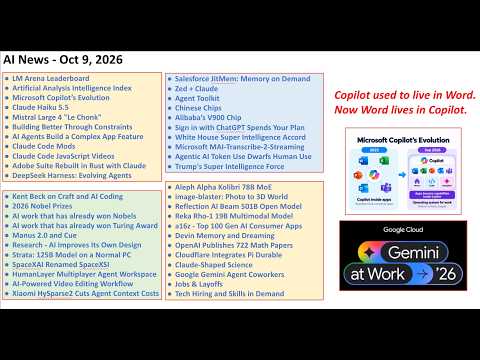
White House Announces Super Intelligence Accord
The White House has introduced a new 'Super Intelligence Accord' alongside the formation of a dedicated Super Intelligence Force.
Lev Selector