Agents
Hermes Agent Revolutionizes AI with Self-Improvement
NVIDIA Bloghigh confidence
Why it matters
- →Hermes Agent introduces self-improving capabilities, enhancing AI autonomy.
- →It leverages NVIDIA hardware for optimal performance, showcasing hardware-software synergy.
- →The framework's reliability and efficiency set a new standard for local AI agents.
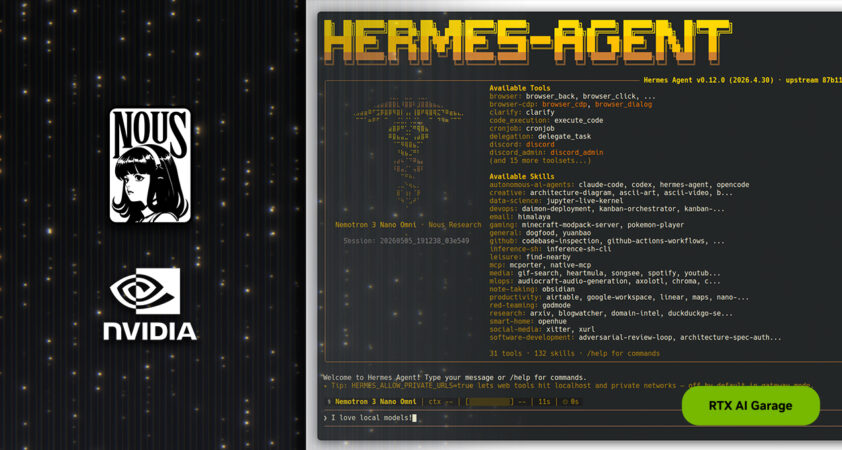
Hermes Agent, created by Nous Research, is gaining traction as a leading AI agent framework, boasting over 140,000 GitHub stars. It is designed for self-improvement and reliability, running optimally on NVIDIA RTX PCs and DGX Spark. The agent's ability to autonomously refine its skills and manage sub-agents makes it a powerful tool for developers. Paired with Alibaba's Qwen 3.6 models, Hermes offers enhanced performance, demonstrating the potential for local AI agents to operate efficiently and continuously.
Read originalMore from NVIDIA Blog
More in Agents
Agentsagents
Fyxer Develops Trusted AI Executive Assistant
Fyxer has crafted an AI executive assistant that stands out by leveraging OpenAI models, fine-tuning, and user feedback to deliver personalized email management. By integrating memory and adapting to each user's unique voice, Fyxer aims to streamline inbox organization and email drafting. This approach not only enhances productivity but also builds trust with users who see their communication style reflected in the AI's output. The development signifies a step forward in creating AI tools that are both effective and personalized, offering a glimpse into the future of AI-driven personal assistance.
OpenAI
 © TechCrunch AI
Agentsagents