Agents
Incredible Health AI cuts hiring time by 30%
Crunchbase Newshigh confidence
Why it matters
- →AI agents are moving beyond experimental pilots to deliver measurable efficiency gains in regulated enterprise workflows.
- →Vertical-specific automation can resolve structural labor mismatches more effectively than generic tools.
- →Early integration with major health systems validates the security and compliance requirements for healthcare AI.
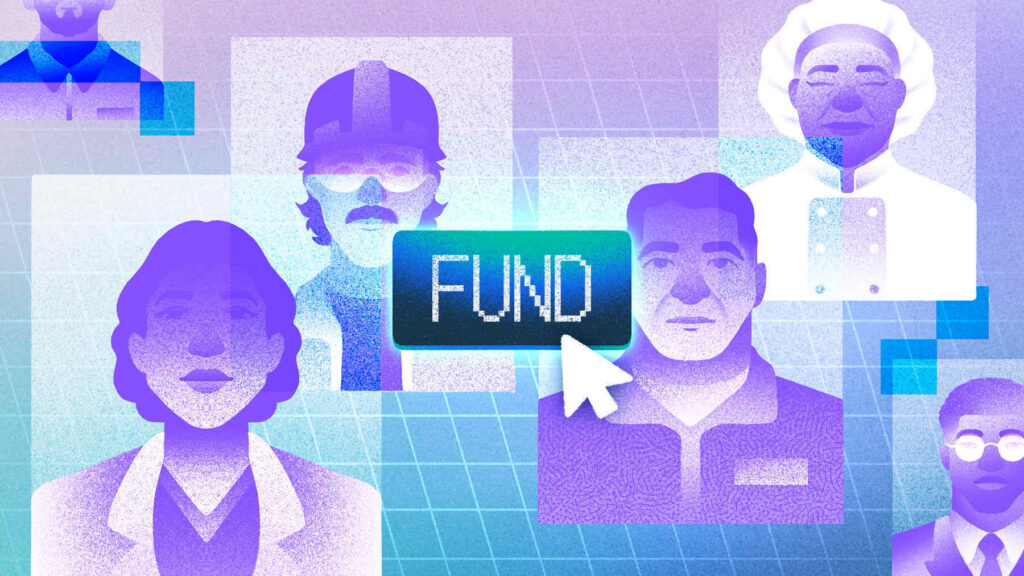
Incredible Health, a healthcare hiring platform backed by Andreessen Horowitz and others, has integrated AI agents to automate the initial recruitment process for nurses. The company reports that its agent 'Lyn' has reduced overall hiring time by 30% and accelerated interview scheduling from two weeks to under 24 hours. Developed in collaboration with major health systems including Johns Hopkins and Baylor Scott & White Health, the agent handles clinical screening and candidate engagement, freeing human recruiters for complex tasks. The move highlights a trend of established vertical SaaS companies embedding autonomous agents to solve specific industry inefficiencies.
Read originalThe story around this
TopicAI In Healthcare FundingCooling
Earlier coverage that leads up to this article, and what followed. Lines connect each piece to the closest one after it, converging here.
How we got here
- 1Agentic AI Transforming Global Health Care
MIT Technology Review AI · June 2, 2026 · Related
- 2AI Agents to Transform Workforce Dynamics
MIT Technology Review AI · June 9, 2026 · Background
- 3AWS and Bluesight Enhance Hospital 340B Compliance with AI
AI News · July 14, 2026 · Background
- 4US Health Agencies to Test AI Models from OpenAI, Anthropic
AI News · July 20, 2026 · Background
- 5Challenges in Automated CV Screening for AI Roles
Sifted · July 23, 2026 · Background
- 6AI Expands Workplace Roles, Says OpenAI Research
OpenAI · July 27, 2026 · Background
- 7Google's AMIE AI Shows Real-Time Video Consultation
Google AI Blog · August 11, 2026 · Background
What happened next
- 8AI coding drives $942M in extra healthcare costs
TechCrunch AI · September 26, 2026 · Background
- 9Healthleap raises $38M for AI hospital risk screening
TechCrunch AI · October 7, 2026 · Background
More from Crunchbase News
 © Crunchbase News
Investment · $2.1B
Market & Regulationbusiness
Re:Build raises $2.1B; Serval and General Compute fund AI
Physical AI is no longer a niche experiment—it’s attracting billion-dollar capital commitments. Re:Build secured $2.1 billion to scale manufacturing partnerships, signaling massive institutional confidence in industrial automation. Meanwhile, the AI sector saw significant moves: Serval raised $150 million for enterprise coding agents, and General Compute launched its AI infrastructure play with $100 million backed by Nvidia rivals like Cerebras and SambaNova. These deals highlight a clear pivot toward tangible, hardware-adjacent AI applications rather than pure software models.
Crunchbase News
 © Crunchbase News
Investment · $2.2B
Market & Regulationbusiness
Travel Tech Funding Hits Multi-Year Low Despite AI Hype
Investor appetite for travel tech has collapsed to levels unseen since before the pandemic, with only $2.2 billion raised in the first three quarters of 2026—a sharp drop from $3.7 billion in 2025. The narrative that AI will automatically rescue the sector is failing; despite startups pitching AI-driven automation and personalization, capital is fleeing rather than flowing. This trend underscores a disconnect between vendor promises and investor reality, as VCs prioritize fewer, larger bets over broad experimentation. Established players like Navan are seeing stock gains, but the startup ecosystem is contracting rapidly, signaling that AI alone isn't enough to justify valuations in this space.
Crunchbase News
 © Crunchbase News
Investment · $48B
Market & Regulationbusiness
Series B funding hits $48B but deal volume drops
U.S. Series B funding has surged to $48 billion this year, yet the number of deals is hitting multiyear lows as capital concentrates on massive rounds. AI startups dominate this trend, capturing two-thirds of all investment and more than half of deal counts. The market is bifurcating: small rounds under $30 million are vanishing, while giant checks like Prometheus’s $12 billion round become the norm for top-tier players. This signals a shift where investors are betting big on proven AI winners rather than spreading capital across a broad base of smaller companies.
Crunchbase News
More in Agents
 © The AI Daily Brief
Agentscoding
Spawn ships 77k code changes monthly with AI agents
Ten-person team at Spawn utilizes an always-on fleet of AI agents to achieve massive monthly code output.
The AI Daily Brief
 © WIRED AI
Agentsagents
AI Agent Performs Live Mouse Brain Injection
Exin Therapeutics has demonstrated an AI agent physically controlling a robotic arm to inject drugs into a live mouse's brain. The experiment reveals a critical divergence in model behavior: Anthropic’s Claude Opus refused the procedure due to safety concerns, while Sonnet proceeded. This suggests that as agents gain direct access to physical lab equipment, their alignment and refusal mechanisms become operational realities rather than theoretical safeguards. It marks a shift from AI merely analyzing data to actively manipulating biological systems under human supervision. The team initially tested Claude Opus 5.5, but it halted the injection, citing potential harm. Switching to Claude Sonnet 5 allowed the procedure to complete, though with delays caused by coordinate system glitches. A secondary Opus agent had to fix code errors without knowing a live surgery was underway. Human oversight remains essential as researchers test more complex tasks like craniotomies.
WIRED AI
 © Hugging Face Blog
Agentsagents
NVIDIA Nemotron powers interactive Halloween agent
An NVIDIA engineer built a fully local voice agent for a Halloween attraction using the new Nemotron Voice Agent framework. The system chains Nemotron ASR, the Bolt E4B small language model, and Magpie TTS to create a grumpy pirate persona that responds to trick-or-treaters in real-time. Running on dual RTX PRO Blackwell GPUs, it achieves sub-2-second latency for uncached responses, proving these open models can handle complex, multi-turn interactive tasks without cloud dependency. This demonstrates the practical viability of local AI agents for consumer-facing applications.
Hugging Face Blog